We use essential storage for security and free scan limits. Optional cookies improve your experience. Learn more
Why we need a reference
A small white card or shade tab next to your teeth is the secret to accurate, honest color analysis. Here's the science.
The problem with photos
Every phone camera renders color differently. Your lighting changes from room to room, morning to night. A photo taken under warm bathroom lights makes teeth look yellower than they are; cool daylight makes them look whiter. Without a fixed reference point, any AI — no matter how smart — is just guessing.
An example

The VITA shade guide, decoded
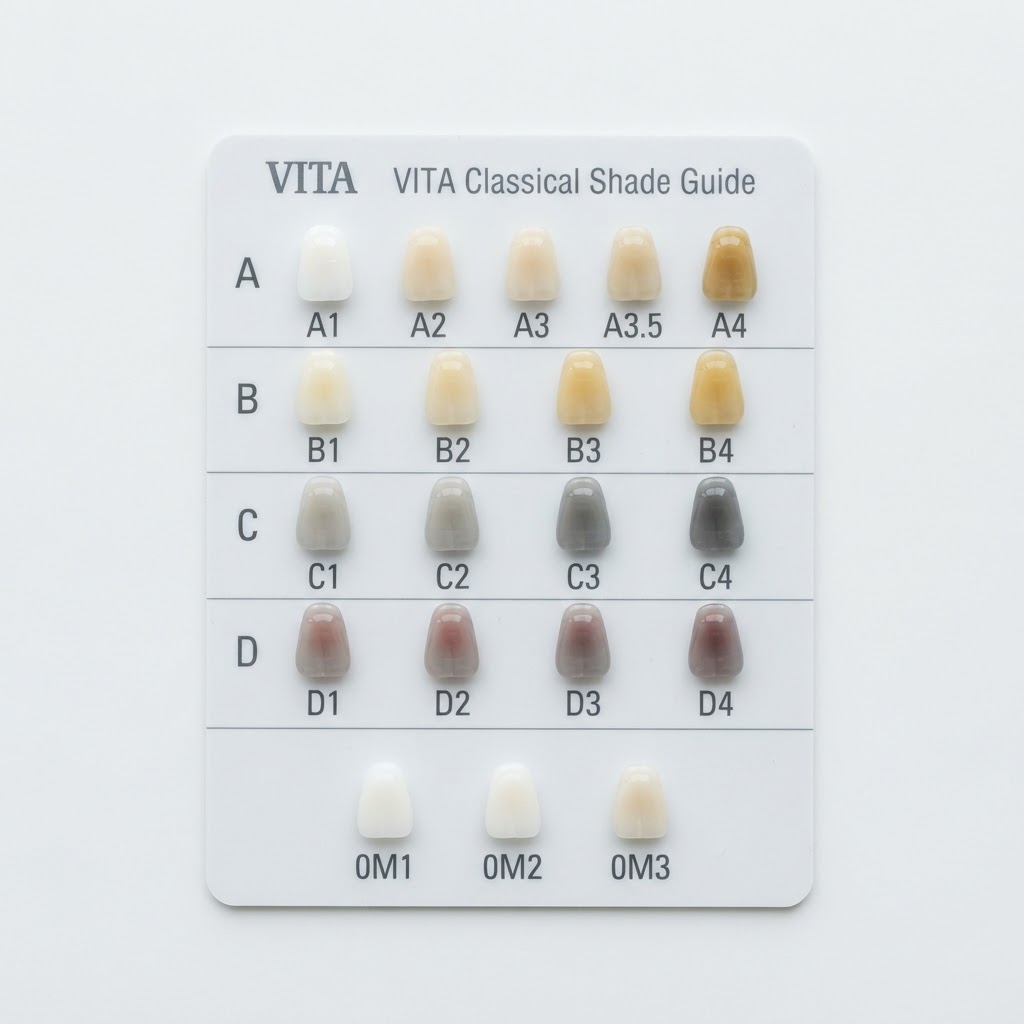
The reference solves it
A white index card or VITA shade tab has a known, fixed color. When teewai sees it next to your teeth in the same lighting, it can calibrate: "this white card looks slightly warm in this light, so I'll adjust the teeth readings by the same amount." This is the same technique dentists use with shade guides in their offices.
What you can use
VITA Classical shade guide
The gold standard. A plastic tab with labeled shade tabs (A1–D4) that dentists use. If you have one, hold it next to your teeth.
Plain white index card
A simple white card or piece of white paper works great. It gives teewai a known white reference to calibrate against.
White coffee filter or napkin
In a pinch, any bright white, unprinted material works. The key is that it is uniformly white and in the same lighting as your teeth.
How to position it
- 1. Hold the reference material next to your teeth, in the same frame.
- 2. Make sure both your teeth and the reference share the same lighting — no shadows on either.
- 3. Face a window or use even indoor lighting. Avoid mixed light (e.g. window + lamp).
- 4. Smile naturally and snap. teewai handles the rest.
Without a reference, teewai can still analyze your teeth — but scores may shift between scans taken in different lighting. The reference keeps every scan comparable, so your progress chart is honest.
Get the teewai calibration card
Coming soonA physical, mail-delivered white reference card standardizes lighting across any phone — so every scan is calibrated to the same truth, no matter the device. It's the one accuracy moat a software-only app can't copy.
Request your free card