
Peroxide Chemistry: Hydrogen vs Carbamide for Safe Whitening
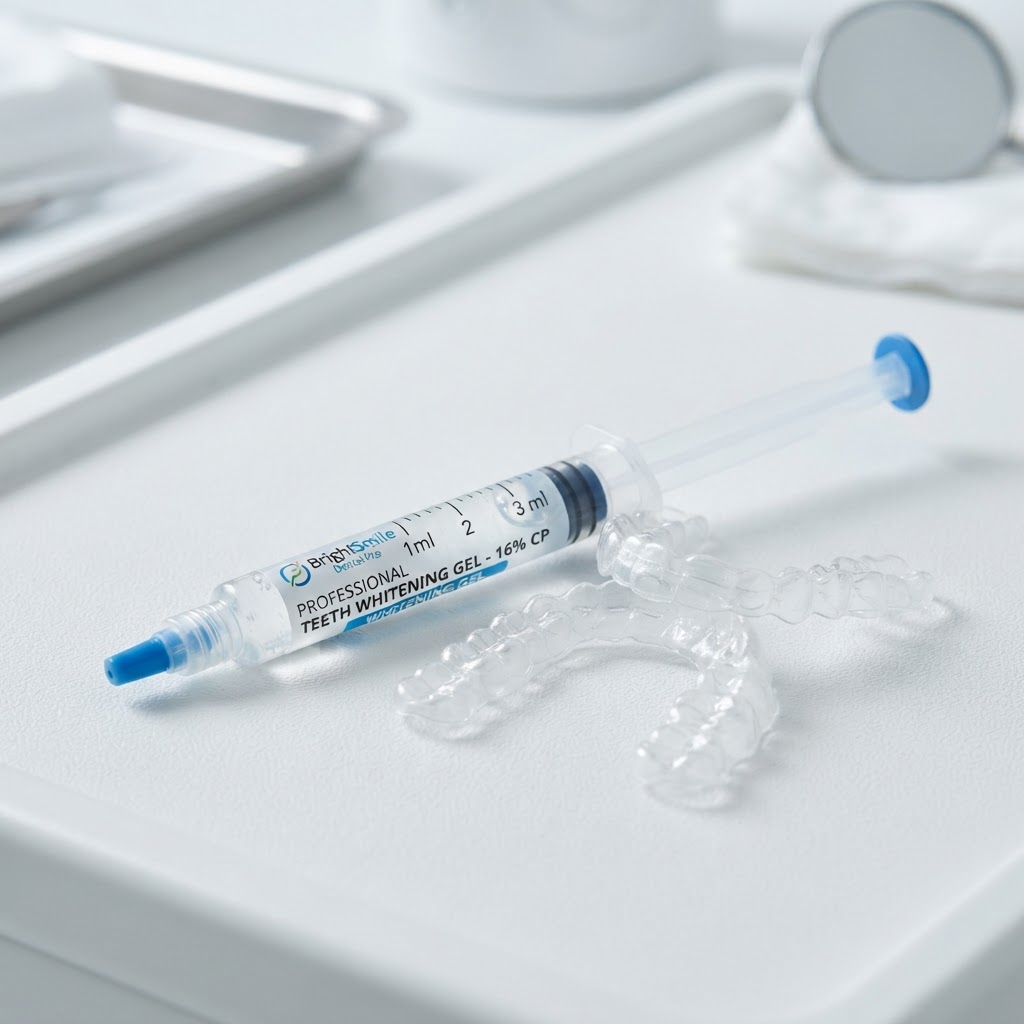
The two bleaching agents in every whitening product work differently. Understanding the chemistry helps you pick the right one and use it safely.
Almost every effective whitening product relies on peroxide. The two forms you will see are hydrogen peroxide (HP) and carbamide peroxide (CP). They are related: carbamide peroxide breaks down into hydrogen peroxide and urea, so CP is essentially a slow-release reservoir for HP. A 10% carbamide peroxide gel yields roughly 3.5% hydrogen peroxide once it decomposes.
| Property | Hydrogen peroxide (HP) | Carbamide peroxide (CP) |
|---|---|---|
| Active agent | Free H₂O₂ | H₂O₂ + urea (slow release) |
| Typical strength | 6–15% strips · 25–40% in-chair | 10–22% take-home trays |
| Speed | Fast (30–60 min) | Slow (1–8 h / overnight) |
| Sensitivity risk | Higher | Lower |
| Best for | Quick, in-chair results | At-home, gentle, sustained |
| Stability | Single-use, degrades fast | Sustained release over hours |
Hydrogen peroxide acts fast. It penetrates enamel and dentin and oxidizes the large, dark chromogen molecules (the double-bonded compounds that cause stains) into smaller, lighter molecules. This is why in-chair whitening uses high-concentration HP — results in a single visit. The trade-off is a higher risk of transient tooth sensitivity and gum irritation if the gums are not protected.
Approximate share of users reporting transient sensitivity. Figures vary by study; sensitivity is temporary and reversible in nearly all cases.
Carbamide peroxide acts slower but gentler. Because it releases HP gradually over hours, it is the standard for at-home trays and overnight whitening. The slower release means less sensitivity per session, which is why dental literature consistently recommends CP for self-directed use. teewai recommends a method based on your scan — if your enamel looks thin or sensitive, it leans toward low-concentration CP trays over high-intensity HP strips.
A safety note the research is clear on: peroxide does not damage enamel when used at recommended concentrations and durations. The risk is not structural — it is sensitivity, which is temporary and reversible. The single most important variable is contact time on the tooth surface, which is why well-fitted trays outperform generic strips for uneven teeth.
See where you sit on the VITA scale — scan your smile with teewai.