
The Science of Tooth Sensitivity After Whitening
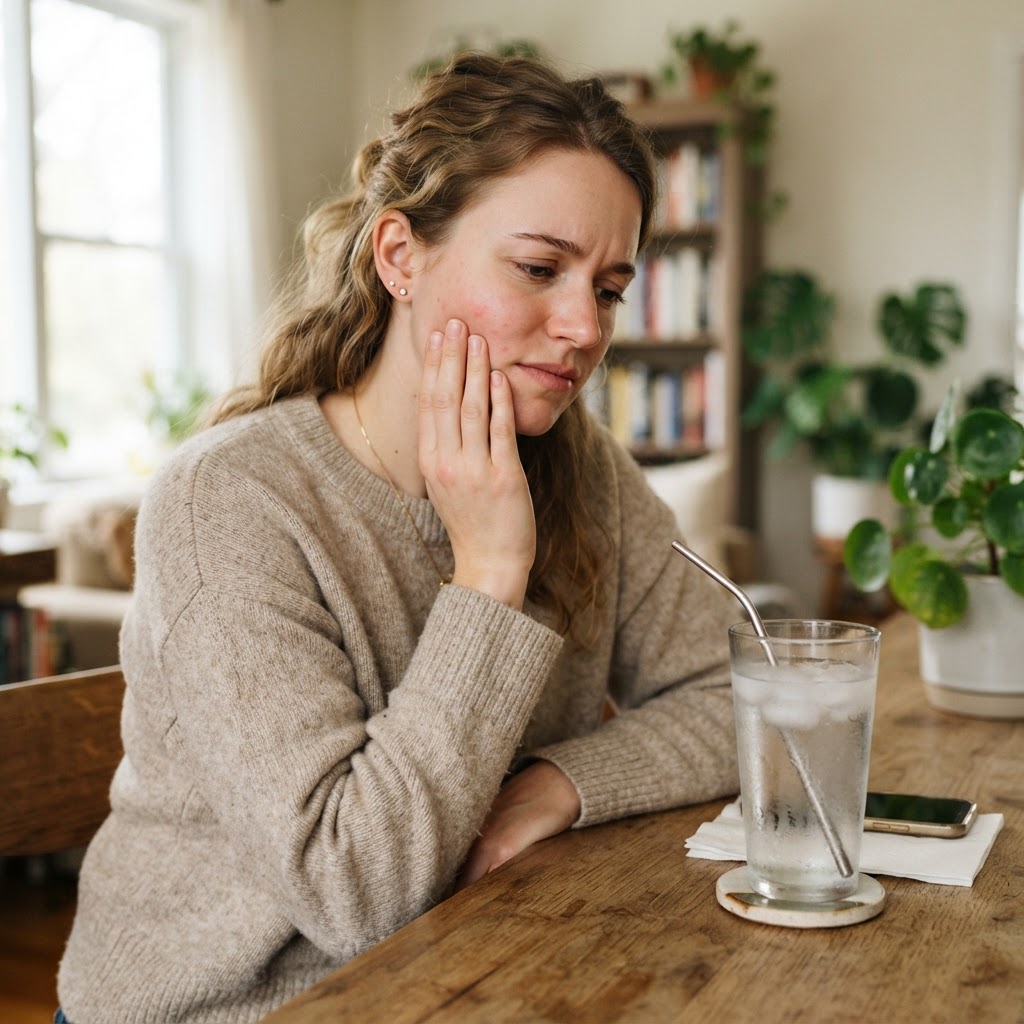
That zing after whitening is real, measurable and temporary. Here is what is actually happening inside the tooth — and how to keep it to a minimum.
Whitening sensitivity is not damage — it is fluid movement. Inside each tooth are thousands of microscopic tubes called dentin tubules that run from the enamel down to the nerve. Peroxide penetrates the enamel and shifts fluid inside those tubules; the nerve reads the shift as a sharp, transient zing, especially to cold air and drinks. When the peroxide clears, the fluid settles and the sensation stops.
| Factor | Effect | How to manage it |
|---|---|---|
| Peroxide concentration | Higher = more sensitivity | Start low, escalate only if needed |
| Contact time | Longer = more | Shorten sessions if zinging |
| Enamel thickness | Thinner = more | Use fluoride to remineralize |
| Gum recession | Exposed roots = more | Use a tray that covers gums |
| Session frequency | Back-to-back = more | Leave 24 h between sessions |
| Desensitizing toothpaste | Reduces zing | Use 2 weeks before & during |
Share of users reporting any sensitivity. It peaks in the first hours and is largely gone within 48 hours.
Who is most at risk: people with receding gums (exposed dentin), already-sensitive teeth, thin enamel, or recent deep cleanings. If you fit any of those, a desensitizing toothpaste (with potassium nitrate or stannous fluoride) used for two weeks before and during a whitening cycle measurably lowers the zing — the evidence is consistent across trials.
The rule that keeps sensitivity manageable: if it hurts, pause. Pushing through sensitivity does not whiten faster — it just inflames the nerve. A day or two off, a fluoride rinse, and dropping down a concentration almost always resolves it. teewai builds this into your plan: if your scan flags thin enamel or gum recession, it starts you on a low-concentration CP tray and spaces your sessions rather than stacking them.
See where you sit on the VITA scale — scan your smile with teewai.