Reading a Smile With Computer Vision
How teewai turns a single phone photo into a whiteness score, a VITA shade and a health read — and where it is honest about its limits.
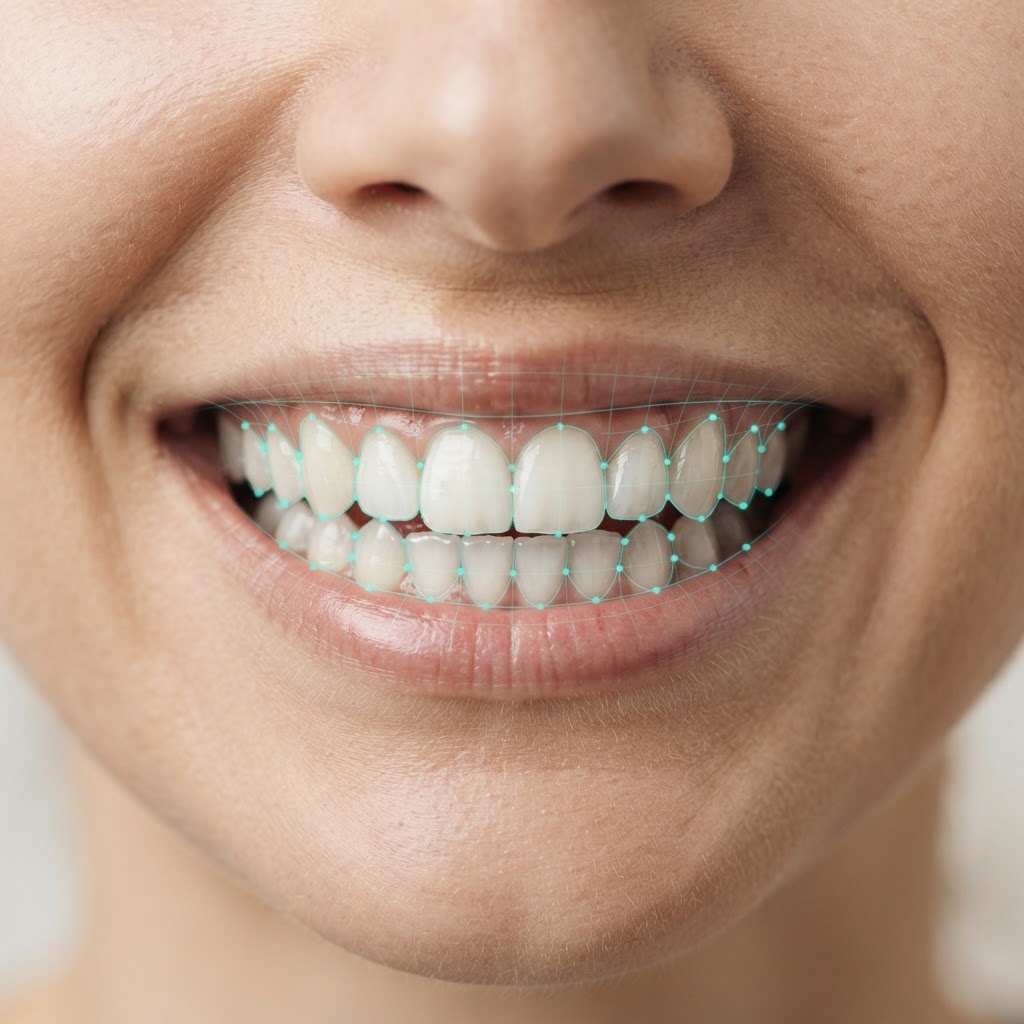
When you snap a photo, teewai runs it through a vision model trained to recognize the visual features of teeth, gums and staining. It isolates the smile zone — the front six teeth that dominate how a smile is perceived — and analyzes the color of the enamel there in CIE Lab color space, the same coordinate system dental research uses for shade measurement.
| Stage | Input | Output |
|---|---|---|
| 1 · Detection | Raw phone photo | Teeth + gum regions |
| 2 · Smile zone | Detected teeth | Front 6 teeth mask |
| 3 · Color read | Smile zone pixels | L*, a*, b* coordinates |
| 4 · Shade match | L*a*b* | VITA shade code |
| 5 · Health pass | Full frame | Gums, plaque, enamel |
| 6 · Score | All signals | Whiteness + health 0–100 |
The whiteness score combines several signals: luminance (how light the enamel is), a yellow-hue saturation index (how much yellow chromogen is present), plaque coverage and stain density. These are weighted into a 0–100 score that correlates with where you sit on the VITA scale. A separate pass reads gum health, plaque level and enamel condition to produce the dental-health score.
Weights are tuned against clinical shade references and shift slightly per scan depending on image quality.
A key design choice: teewai does not color-correct or "normalize" your photo before analysis. Early experiments with brightness normalization caused the model to inflate whiteness scores — a darker photo would be artificially lifted. By analyzing the raw captured color, the score reflects your real tooth color, not the lighting. This is why a white reference card next to your teeth improves accuracy: it gives the model a known calibration target.
Why a white card matters
A VITA shade guide or a plain white index card beside your teeth gives the vision model a fixed calibration anchor — the same role a grey card plays in photography. It is the single biggest accuracy lever you control.
Where the AI is honest about its limits: it screens, it does not diagnose. It can flag that your gums look inflamed or that a white-spot lesion appears, but a dentist confirms with probing and X-rays. teewai is a wellness companion that points you toward the right conversation with your dentist — not a replacement for one.
See where you sit on the VITA scale — scan your smile with teewai.